

Latest Past Events

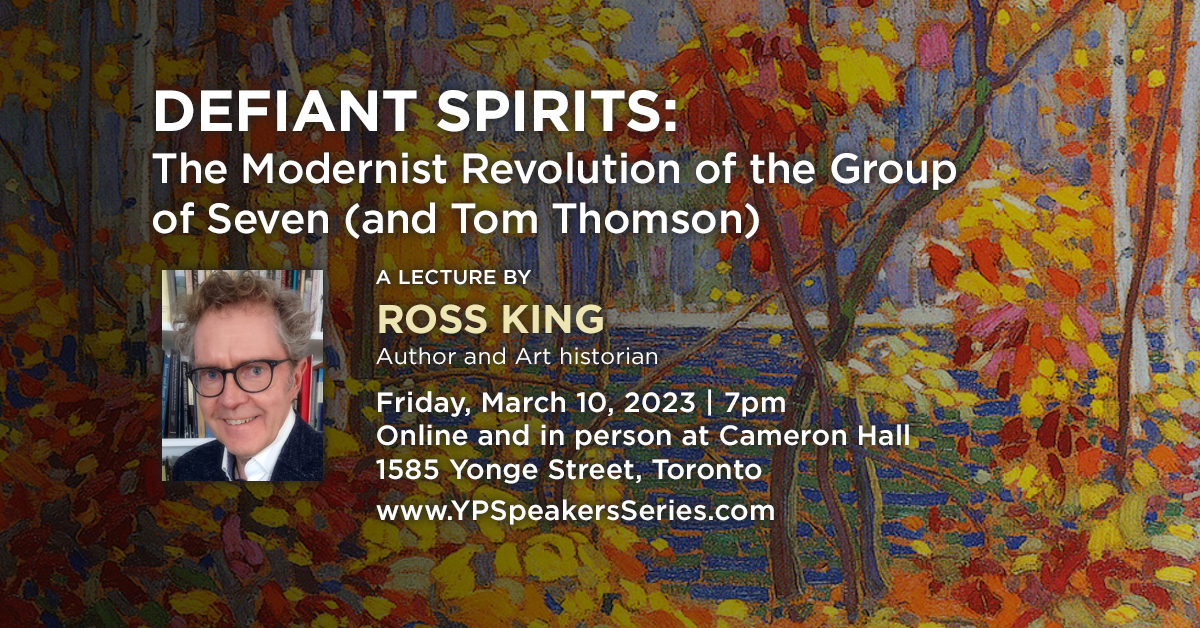
Defiant Spirits: The Modernist Revolution of the Group of Seven (and Tom Thomson)

Cameron Hall 1585 Yonge Street, Toronto

In 1924 an exhibition in London of Canadian landscapes moved the renowned English critic C. Lewis Hind to celebrate them as “the most vital group of paintings produced since the war – indeed, this century”. These landscapes of Canada’s northern lakes and rugged backwoods, painted in a boldly Post-Impressionist style, had been produced over the previous decade by the collective of Toronto-based painters known as the ‘Group of Seven’, whose aim was to forge a national school of landscape painting. In this lecture Ross King will look at both the myths and the realities of how these painters – including their talismanic colleague Tom Thomson, who died in 1917 – stormed the conservative bastions of Canadian art to establish themselves on the international stage as practitioners of a distinctive avant-garde.
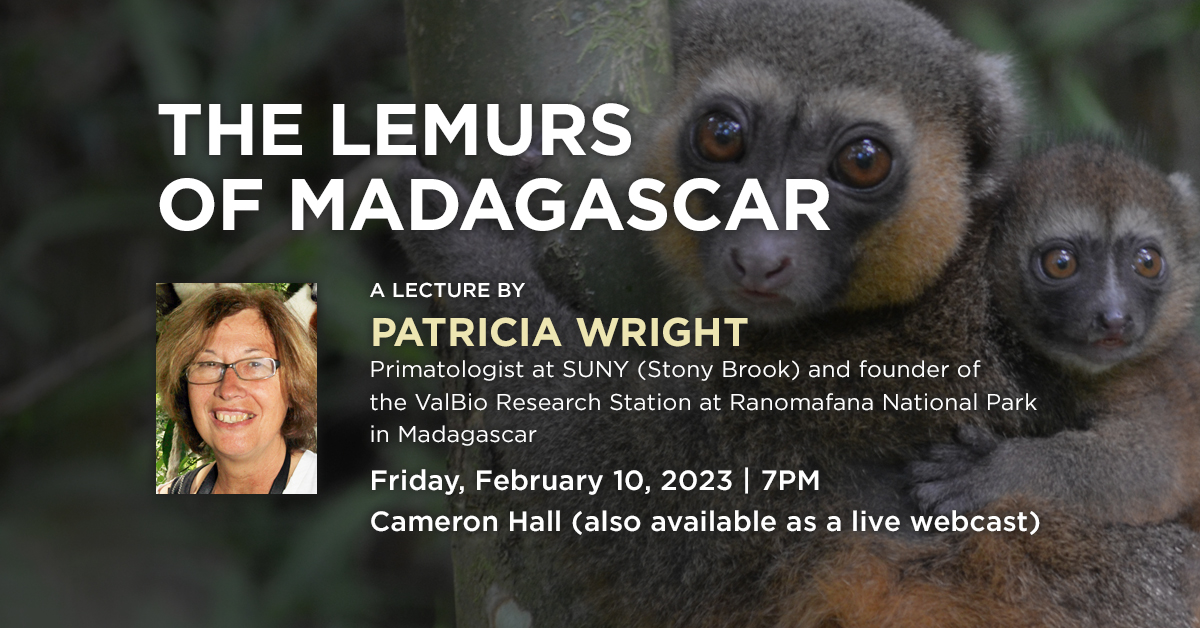
The Lemurs of Madagascar

Cameron Hall 1585 Yonge Street, Toronto

Lemurs are primates found only in Madagascar, a beautiful and exotic place, the fourth largest island in the world. However it is threatened by habitat loss and environmental degradation. Professor Wright will discuss the varieties of lemurs including the Golden Bamboo Lemur she discovered that was new to western science, her work to create a protected area that became Ranomafana National Park and a World Heritage Site, and the challenges facing Madagascar and Lemur conservation efforts. She will feature her recent work to preserve the "Lost rainforest of Crystal Mountain" and update us on the translocation of twelve threatened greater bamboo lemurs from a degraded forest fragment into the protection of the Ranomafana National Park.”

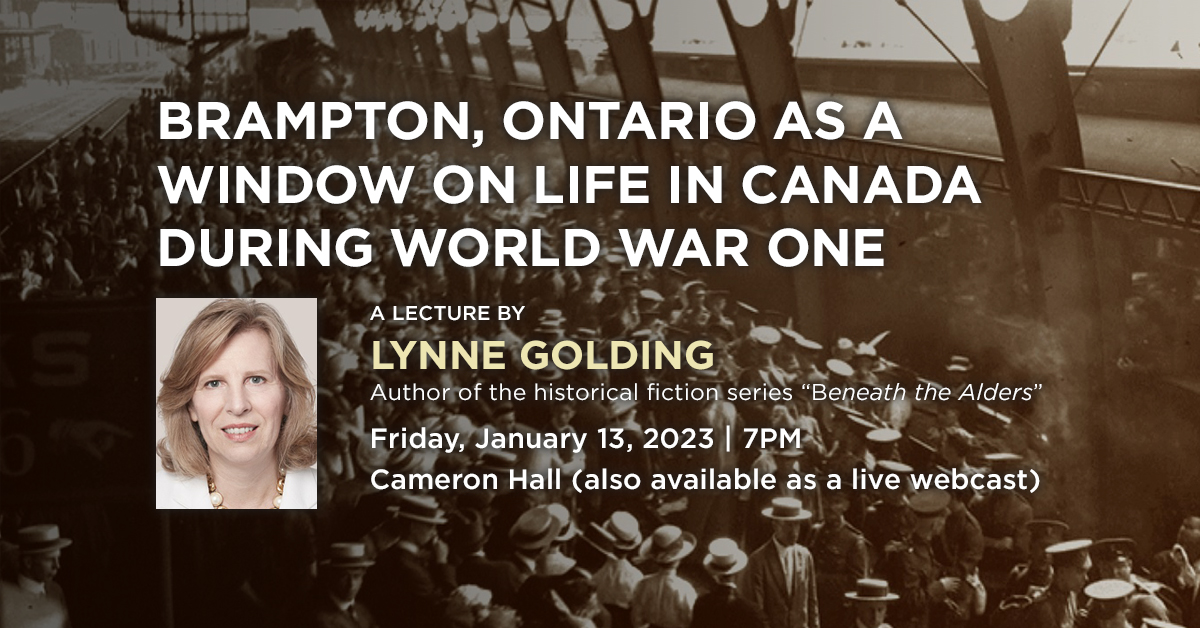
Brampton, Ontario as a Window on Life in Canada during World War One

Cameron Hall 1585 Yonge Street, Toronto

Our history lessons about the Great War focus on life in trenches, poison gas, battles and the bravery of our troops overseas. But what was life like for those at home in Canada? Based on stories told to her by her great aunt and research conducted in the local archives, Lynne Golding will speak to us about recruitment efforts; the shortages of food and farm labour; the conversion of factories and business for the production of war materials; the development of flight schools; the treatment in Canada of those of Austrian heritage; the endless fundraising and knitting efforts; the creation of military convalescent hospitals; and the onset of Spanish flu.